Professional Gas Blow Torches for Trade and Maintenance Work
A reliable blow torch gives plumbers and tradespeople the portable, controllable heat needed for soldering, brazing and a wide range of maintenance tasks. The right model should feel secure in the hand, provide appropriate flame adjustment and connect safely to the chosen fuel cylinder.
PipeStation’s blow torch collection is focused on torch-only products. It suits customers replacing an existing burner, upgrading to useful features such as Piezo ignition or selecting a torch to use with compatible Map-Plus or propane cylinders already in stock.
The current range includes ProFire, Turbo, PT9000 and Super Total Fire blow torches. Product features vary, so compare the
listings before choosing. If you need a cylinder and torch together, a complete MAPP Gas or propane torch kit may be more convenient.
What Is a Blow Torch Used For?
A gas blow torch mixes fuel with air to create a directed flame. In plumbing and maintenance work, it is commonly used to heat metal quickly and precisely without moving a larger gas-cylinder setup into the work area.
Typical applications include:
- Soft soldering copper pipe and fittings
- Brazing suitable copper pipework
- Heating seized nuts, bolts and metal components
- General plumbing installation and repair
- Thawing frozen pipework using an appropriate controlled method
- Suitable heat-shrink work
- Selected paint and coating removal tasks
- Mechanical and workshop heating applications
Not every blow torch is suitable for every task. Fuel choice, burner design, pipe size, operating angle and working conditions all affect performance. Use the product specification and manufacturer’s instructions to decide whether a torch is appropriate.
Blow Torches Available from PipeStation
ProFire Blow Torch
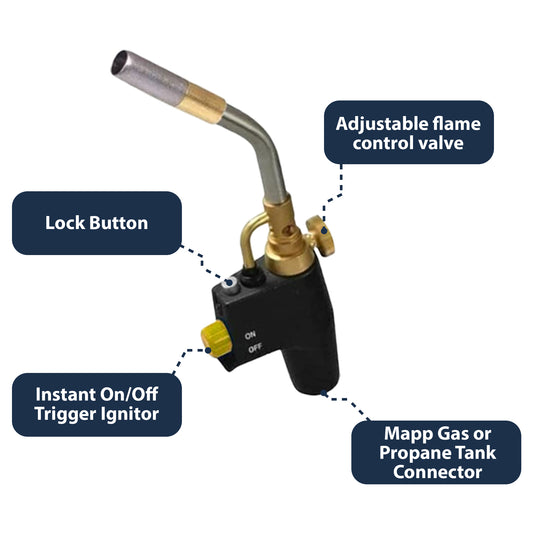
The ProFire is a straightforward torch-only option for customers who need an adjustable flame and compatibility with suitable MAPP-type or propane cylinders. Its manually adjustable valve allows the flame size to be matched to different heating tasks.
This model can suit users who already have an appropriate ignition method and do not require the additional controls found on more
advanced torches. Check the product page to confirm everything included in the pack.
Turbo Blow Torch
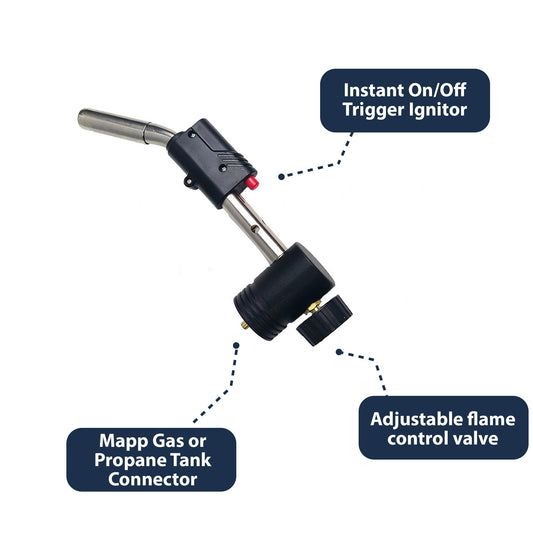
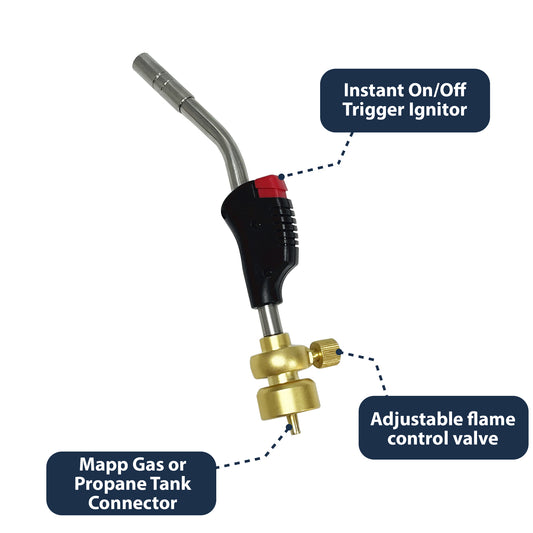
The Turbo Blow Torch adds built-in Piezo ignition for convenient lighting. It also features an adjustable valve and a lock key for maintaining a continuous flame during longer heating tasks.
This combination makes it useful for plumbers who want quick ignition and do not want to hold down a trigger throughout the job. As with any continuous-flame feature, the torch must remain under the operator’s control and should never be left lit unattended.
PT9000 Blow Torch
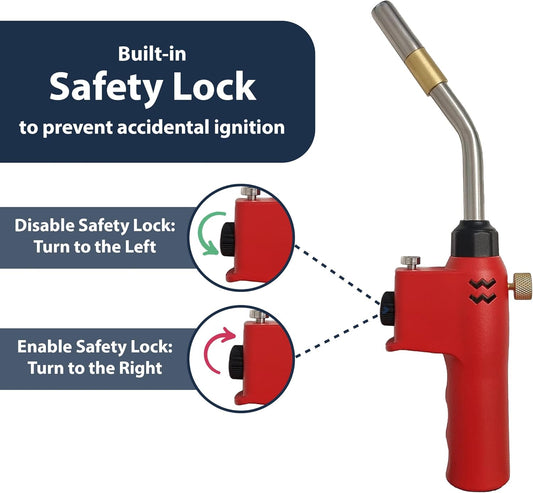
The PT9000 combines adjustable flame control, Piezo ignition and a continuous-flame lock with a built-in safety lock intended to help prevent accidental ignition.
It is a feature-rich choice for trade users who regularly switch between jobs and value convenient lighting and flame control. Fuel is not included with the torch-only listing unless stated on the product page.
Super Total Fire Blow Torch
The Super Total Fire Blow Torch provides adjustable flame control, Piezo ignition, a continuous-flame lock and a built-in safety lock. It
is offered as a standalone torch and may also be available in apack with a Map-Plus Gas cylinder.
Choose the torch-only version if you already have compatible fuel. Select the kit where you require both components and want the convenience of purchasing them together.
How to Choose the Best Blow Torch for Plumbing
The best plumbing blow torch is the one that matches the fuel, type of work and working environment. A higher-priced torch is not automatically the correct option if its connection or flame characteristics do not suit the intended job.
Confirm Fuel Compatibility
Start by deciding whether the torch will be used with propane, Map-Plus or another approved fuel. Some PipeStation torches support both propane and MAPP-type cylinders with the stated connection, but compatibility must be confirmed for the individual model.
Never assume a fuel is suitable simply because the cylinder screws onto the torch.
Check the Cylinder Connection
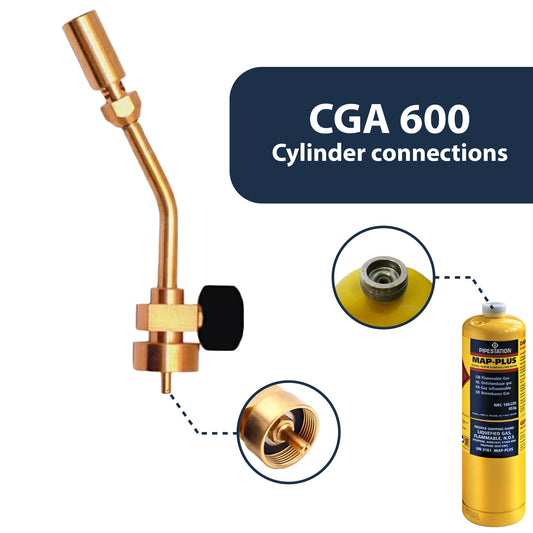
The blow torches in this collection are listed for cylinders using a CGA 600 valve connection with a 1-inch × 20 UNEF thread. Compare this specification with the cylinder before purchase.
Do not force a connection, modify a valve or use an improvised adaptor. If combining products from different manufacturers, check the instructions for both.
Compare the Ignition System
A manual-ignition torch requires an appropriate spark ignitor. A model with built-in Piezo ignition creates the ignition spark using
a trigger, making lighting quicker and reducing the need for a separate accessory.
Piezo ignition is useful for frequent trade use, although the complete torch should still be inspected and operated according to its instructions.
Look for Adjustable Flame Control
An adjustable valve allows the user to change the flame size. This helps match the heat to different fitting sizes and applications.
A smaller controlled flame may be preferable in a confined area, while a larger flame can heat more substantial fittings quickly where the surroundings allow it. Avoid using more heat than the work requires.
Consider a Continuous-Flame Lock
A lock can maintain the flame without constant trigger pressure. This may reduce hand fatigue during longer heating tasks, but it also makes disciplined handling essential. Engage the feature only while actively controlling the torch and release it before putting the tool down.
Check for a Safety Lock
Selected torches include a safety lock designed to reduce the chance of accidental ignition. This is a useful additional feature, but it does not replace safe storage, correct disconnection or careful handling.
Consider Build and Grip
The torch should be comfortable and secure to hold, particularly when working around restricted pipework. Consider body construction, handle shape, control placement and balance once the cylinder is attached.
Check the Pack Contents
Some PipeStation listings contain only the blow torch, while others include fuel, an ignitor or additional accessories. Read the “pack
includes” section before ordering so you know whether a separate cylinder is required.
MAPP Gas Blow Torches
A MAPP Gas blow torch is commonly selected for jobs where rapid, concentrated heating is helpful. Modern products may be labelled Map-Plus or use other MAPP-type formulations, so the cylinder label and safety information should be treated as definitive.
When paired with a compatible torch, Map-Plus fuel can be useful for:
- Faster heating of copper fittings
- Larger pipe sizes within the torch’s rated capacity
- Brazing with a suitable burner and filler material
- Cold working conditions
- Repeatedprofessional soldering tasks
Higher heat needs careful control. Move the flame around the fitting and avoid concentrating it on one point for too long. excessive heat can burn flux, oxidise copper or damage nearby materials.
Propane Blow Torches
Propane is a practical and economical fuel for many everyday
heating and soft-soldering jobs. A compatible propane blow torch can be well suited to smaller copper fittings, occasional repairs and general maintenance.
Some torches in the PipeStation range support both propane
and Map-Plus cylinders with a CGA 600 connection. This flexibility allows the user to select fuel based on the job, provided both options are expressly approved for the specific torch.
Blow Torches for Soldering Copper Pipe
A suitable gas torch makes it possible to heat the pipe and
fitting evenly until the joint reaches the working temperature of the solder. Good preparation remains just as important as flame performance.
A typical soldering process involves:
- Isolating and completely draining the pipework.
- Cutting the tube squarely and removing burrs.
- Cleaning the mating surfaces of the pipe and fitting.
- Applying a suitable flux according to its instructions.
- Fully assembling the joint.
- Protecting nearby surfaces with an appropriate heat-resistant mat.
- Heating the fitting evenly with a controlled flame.
- Applying the correct solder at working temperature.
- Allowing the joint to cool naturally and cleaning away residue.
- Testing the completed installation appropriately.
Do not try to solder pipework containing residual water.
Water absorbs heat and can prevent the joint from reaching the necessary temperature.
Blow Torches for Brazing
Brazing uses a higher-temperature filler material than soft
soldering. A compatible MAPP-type torch can be suitable, but the torch and burner must have enough capacity to heat the entire joint correctly.
Before brazing, check:
- Fuel approval and valve compatibility
- The burner’s stated brazing capability
- The permitted pipe diameter
- Suitable filler material and flux
- Ventilation and fire protection
- The operator’s competence
If a fitting cannot reach working temperature efficiently,
stop and select equipment with the required capacity instead of heating it indefinitely.
Torch Only or Complete Gas Torch Kit?
Choose a torch-only product when:
- You already have compatible gas cylinders
- You are replacing a worn or damaged torch
- You want to upgrade to Piezo ignition or a flame lock
- You manage torch and fuel stock separately
- You need a specific model
Choose a complete gas torch kit when:
- You are buying your first setup
- You need both torch and fuel immediately
- You want components bundled together
- You also need an ignitor or other included accessories
- You prefer a clearly specified ready-to-purchase pack
Check each listing carefully. A photograph showing a cylinder for scale or context does not necessarily mean fuel is included.
Safe Use of Blow Torches
A blow torch creates an open flame and uses highly flammable
pressurised fuel. Read the instructions for the torch and cylinder before connection or use.
Important precautions include:
- Inspect the torch, seals, valve and cylinder before use
- Confirm the fuel and connection are compatible
- Attach components exactly as instructed
- Check for leaks using the approved method—never a flame
- Clear combustible materials from the work area
- Protect nearby surfaces with a suitable heat-resistant mat or shield
- Maintain adequate ventilation
- Wear appropriate eye protection, gloves and clothing
- Keep the cylinder away from excessive heat and direct flame
- Never leave a lit torch unattended
- Disengage any continuous-flame lock before putting the torch down
- Allow the torch to cool before disconnection or storage
- Store and transport equipment according to the manufacturer’s guidance
Inspect what is behind and around the area being heated.
Timber, insulation and debris can ignite through direct flame, radiant heat or heat conducted along pipework.
Work on regulated gas fittings must be undertaken by a suitably qualified Gas Safe registered engineer where required by law. Using a plumbing blow torch does not qualify someone to alter or repair a gas installation.
Maintaining Your Gas Blow Torch
Regular visual checks help identify problems before the next
job.
- Keep the connection and valve area clean.
- Inspect seals and components for wear or damage.
- Make sure flame controls move correctly.
- Check that ignition and locking mechanisms operate as intended.
- Do not use a torch with a damaged body, connection or burner.
- Allow the torch to cool before cleaning.
- Follow the manufacturer’s process for maintenance and replacement parts.
- Store the torch where it is protected from impact, moisture and contamination.
Do not dismantle or repair pressure-carrying components unless the manufacturer specifically permits the work and provides the correct procedure.
Buy Blow Torches from PipeStation
PipeStation stocks gas blow torches for plumbers, heating engineers, maintenance professionals and capable users who need controlled portable heat. Choose from simple adjustable-flame models or feature-rich torches with Piezo ignition, continuous-flame operation and safety locks.
Before buying, compare the fuel type, CGA 600 connection, ignition system and pack contents. Select a standalone blow torch if you already have suitable fuel, or explore the MAPP Gas and propane torch kits when you need a complete setup.
Browse the products above and choose the blow torch that best suits your plumbing, soldering, brazing or maintenance work. Free UK delivery is currently available on qualifying orders over £20.
Frequently Asked Questions
What is the best blow torch for plumbing?
The best option depends on the fuel, pipe sizes and type of work. An adjustable flame is useful for control, while Piezo ignition and a
continuous-flame lock can make frequent professional use more convenient. Always check compatibility and the torch’s stated working capability.
Can a blow torch be used to solder copper pipe?
Yes. A compatible gas blow torch is commonly used for soldering copper pipe and fittings. Correct preparation, flux, solder and even
heating are essential to producing a sound joint.
Can I braze copper with a blow torch?
Yes, if the torch, burner and fuel are rated for brazing and the pipe diameter. Map-Plus or comparable MAPP-type fuel may provide the higher heat required, but the complete setup must be suitable.
What is Piezo ignition?
Piezo ignition produces a spark when the ignition control is pressed, allowing the torch to be lit without a separate spark ignitor. Selected PipeStation blow torches include this feature.
What is a continuous-flame lock?
A continuous-flame lock keeps the torch burning without constant pressure on the trigger. It can be convenient for longer heating
tasks, but the operator must remain in control and never leave the lit torch unattended.
Can the same blow torch use MAPP Gas and propane?
Some models can use both fuels, but only where the manufacturer approves them and the valve connection matches. Check the
individual product specification before connecting either cylinder.
What connection do PipeStation blow torches use?
The current torches in this range are listed for compatible cylinders with a CGA 600 connection and 1-inch × 20 UNEF thread. Verify this on the individual product page before ordering.
Does a blow torch come with a gas cylinder?
Not always. This category is focused on torch-only products. Complete kits containing a torch and fuel are sold separately, so check the pack contents before purchase.
Should I choose MAPP Gas or propane for soldering?
Propane is often suitable for smaller fittings and routine soft soldering. MAPP-type or Map-Plus fuel may heat larger fittings faster and can be better suited to demanding work. The torch must approve the chosen fuel.
How should a blow torch be stored?
Allow it to cool, turn it off fully and follow the manufacturer’s instructions regarding disconnection from the cylinder. Store the torch and fuel where they are protected from damage, heat and unauthorised access.

 Sold out